

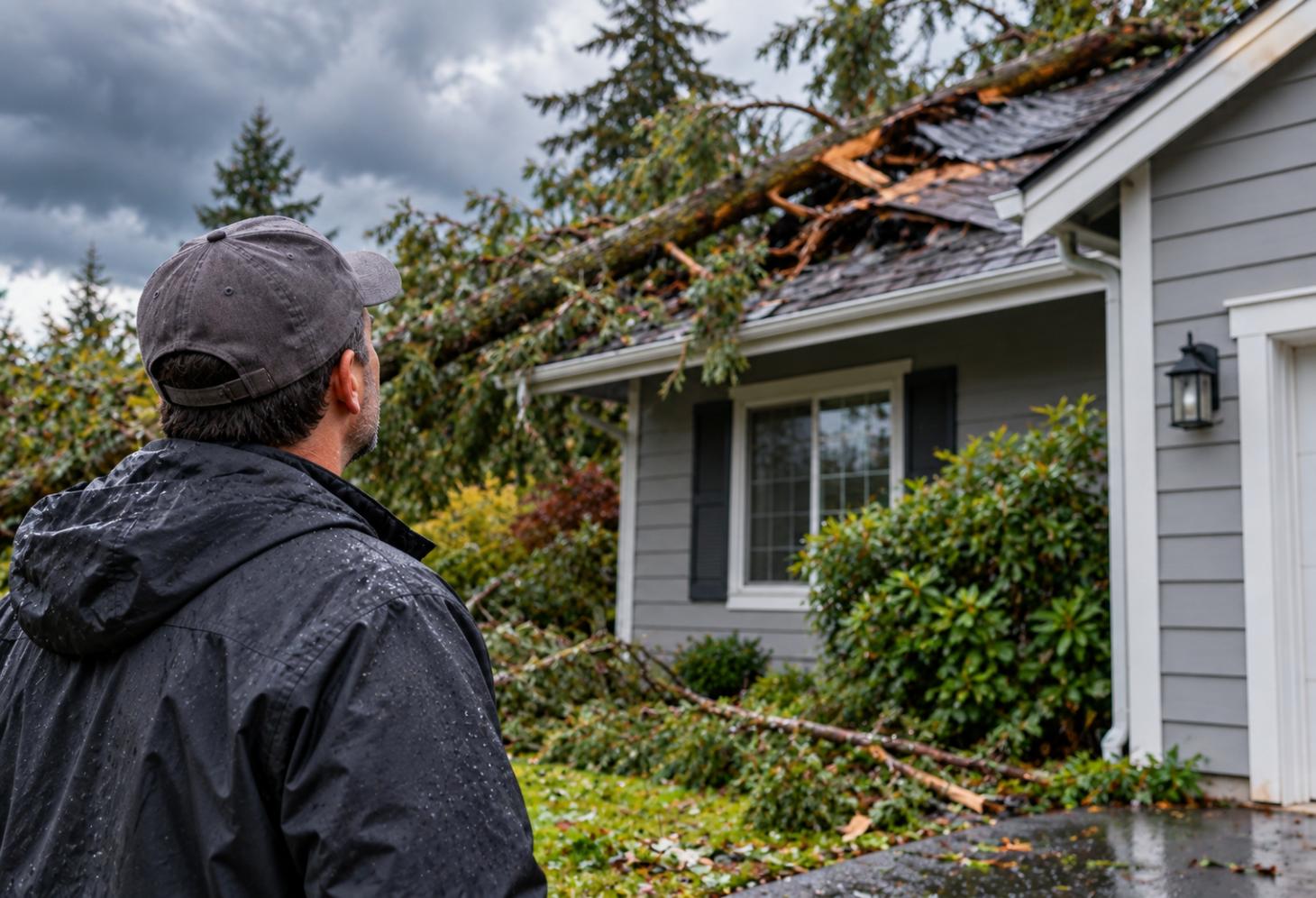
A Pacific Northwest storm can leave behind more than fallen branches and puddles. Wind-driven rain, saturated debris, and damaged roofing or siding can create problems that are easy to miss from the ground, especially around older homes and properties exposed to weather coming off Puget Sound.
If a storm has recently moved through Everett, checking the exterior of your property early can help you spot damage before the next round of rain makes it worse.
What Should You Check After a Storm?
After a storm, check your roof, gutters, siding, flashing, windows, exterior trim, and the ground around your home for anything that looks loose, cracked, displaced, punctured, or unusually wet. You should also look inside the attic and upper floors for moisture stains or signs that water has entered the structure.
Pay particular attention to:
-
Missing, lifted, cracked, or visibly displaced roofing materials.
-
Gutters or downspouts that have pulled away, bent, or become packed with storm debris.
-
Siding and exterior trim that appear loose, cracked, dented, or separated.
-
Water stains on ceilings, walls, attic framing, or insulation.
-
Tree limbs or debris that struck or landed near the roof.
-
Flashing around chimneys, vents, skylights, and roof edges that appears shifted.
-
Standing water near the foundation or water flowing toward the house instead of away from it.
Properties in exposed areas near Port Gardner Bay or neighborhoods such as Bayside and Northwest may experience different wind exposure than homes farther inland, so damage can vary considerably even across the same storm.
Why Does Storm Damage Matter So Much Locally?
Storm damage matters locally because western Washington homes frequently face combinations of wind, rain, wet debris, and prolonged moisture rather than a single isolated weather hazard. Small openings in a roof or exterior surface can continue admitting water during later rain, allowing a seemingly minor storm problem to affect materials underneath.
In Snohomish County, residents are accustomed to wet fall and winter weather. That makes the period immediately after a strong weather event especially useful for inspecting vulnerable areas.
Homes in established neighborhoods such as Lowell, Port Gardner, View Ridge-Madison, and Riverside can also vary substantially in age, roof design, tree coverage, and previous repairs. Those differences influence which parts of a building are most likely to show storm-related wear.
Joe Myers Construction Inc helps property owners evaluate construction and exterior concerns after damaging weather. When we inspect a property, our goal is to identify what has actually been affected and help the owner understand appropriate next steps.
What Local Conditions Can Contribute to Storm Damage?
Everett-area storm damage is commonly influenced by wind, persistent rainfall, saturated trees and soil, clogged drainage systems, and repeated exposure to wet weather. A roof or exterior component that was already worn or slightly loose before a storm can become much easier to damage when those conditions arrive together.
Snohomish County PUD also treats major storms as potential power-outage events and advises residents to stay well away from fallen electrical lines. If storm debris has brought down a utility line near your property, do not approach the line or begin exterior cleanup around it.
From a construction standpoint, storm problems often become more noticeable where several systems meet. Roof edges, flashing, gutters, vents, siding joints, window trim, and roof penetrations deserve especially careful attention.
What Are the Warning Signs of Hidden Storm Damage?
Hidden storm damage often appears as a new leak, discoloration, loose exterior material, unusual drafts, or moisture where the property was previously dry. Some problems do not become obvious until several hours or days after the weather clears, which is why checking the property again after the next rainfall can be useful.
Watch for these warning signs:
-
New ceiling spots, rings, bubbling paint, or drywall discoloration.
-
Damp or compressed attic insulation.
-
Water stains on rafters, roof decking, or attic framing.
-
Roofing material visible on the ground after high winds.
-
Loose fascia, soffit, siding, gutters, or trim.
-
Water appearing around windows or exterior doors.
-
Musty odors developing in an attic or upper room.
-
A roofline or exterior component that suddenly looks different than it did before the storm.
A leak does not always appear directly below the exterior opening. Water can travel along framing, decking, or other materials before becoming visible indoors.
When Should You Call a Professional?
Call a professional when you see evidence of water intrusion, displaced roofing, damaged flashing, loose exterior materials, structural movement, significant impact from a branch, or damage that cannot be safely inspected from the ground. You should also request help when you cannot determine where visible indoor moisture is entering the building.
Homeowners can safely perform many initial observations without climbing onto a roof. Walk around the property from the ground, look through accessible windows, inspect the attic if it can be entered safely, and photograph anything unusual.
Avoid climbing onto a wet, steep, damaged, or debris-covered roof. Storm conditions can leave surfaces slippery, and damage may make portions of the roof less stable than they appear.
If a power line is down, Snohomish County PUD advises people to remain at least 30 feet away and report it to the utility. Electrical hazards should be handled before construction inspection or cleanup begins nearby.
What Commonly Causes Storm Damage Around Everett?
The most common storm-damage causes around Everett include wind lifting exterior materials, branches striking structures, heavy rain finding existing openings, and drainage systems becoming overwhelmed or obstructed. The severity depends on the property’s exposure, surrounding trees, building condition, and how well water is being directed away.
Common causes include:
-
Wind pressure and uplift: Strong gusts can loosen roofing, flashing, siding, gutters, and trim, especially if materials were already aging or poorly secured.
-
Falling branches: Mature trees throughout many Snohomish County neighborhoods can shed limbs during windy weather, creating impact damage to roofs, gutters, siding, fences, and exterior structures.
-
Wind-driven rain: Rain pushed sideways by wind can reach joints and openings that normally receive less direct water exposure.
-
Blocked gutters and downspouts: Leaves, needles, and storm debris can prevent water from draining properly and send it toward roof edges, siding, or foundations.
-
Existing wear: Previous leaks, deteriorated sealants, loose flashing, damaged roofing, or aging exterior materials can become more noticeable after severe weather.
How Can You Prevent Storm Damage From Getting Worse?
You can reduce the chance of storm damage getting worse by keeping vulnerable areas dry when safely possible, maintaining drainage, documenting visible problems, and arranging an inspection before additional rainfall causes more water intrusion. Temporary measures should protect the property without putting anyone on an unsafe roof.
After severe weather:
-
Photograph visible damage before cleanup or repairs.
-
Clear ground-level drains and accessible downspout outlets if it is safe.
-
Move belongings away from active interior leaks.
-
Use containers to catch dripping water indoors.
-
Check the attic for moisture after rainfall.
-
Keep people away from visibly damaged exterior sections.
-
Schedule professional evaluation when roofing or structural components may be involved.
Do not make a risky roof climb simply to place a tarp or inspect shingles. Protecting the building matters, but personal safety comes first.
What Results Should You Expect From a Storm Damage Inspection?
A storm damage inspection should help clarify which areas were affected, whether water has entered the structure, and what type of repair may be appropriate. Depending on the condition, the next step could range from a localized repair to more extensive restoration of roofing, siding, trim, flashing, or other damaged components.
Not every post-storm issue requires major reconstruction. Likewise, damage that looks small from the yard can sometimes involve materials beneath the visible exterior surface.
The purpose of an inspection is to separate cosmetic concerns from conditions that could allow ongoing water intrusion or deterioration.
What Mistakes Should Homeowners Avoid After a Storm?
The biggest mistakes after a storm are ignoring small warning signs, making unsafe roof inspections, covering damage without understanding its source, and assuming that no visible indoor leak means the exterior is undamaged. A better approach is to document what changed and investigate suspicious areas before another period of wet weather.
Mistake: Waiting for a ceiling leak.
Consequence: Water may already be affecting roof decking, insulation, or framing before it reaches a finished ceiling.
Better approach: Check exterior surfaces and accessible attic areas after significant weather.
Mistake: Climbing onto a wet roof.
Consequence: Slippery surfaces and concealed damage increase the chance of injury.
Better approach: Inspect from the ground and use a professional when closer evaluation is needed.
Mistake: Ignoring a loose gutter or piece of flashing.
Consequence: Another windy or rainy period may pull the component farther away and expose adjoining materials.
Better approach: Have displaced components evaluated promptly.
Mistake: Cleaning up before taking pictures.
Consequence: You lose a useful record of what the property looked like immediately afterward.
Better approach: Photograph damage and debris before removing anything when practical.
What Is a Common Local Storm-Damage Scenario?
A common local scenario is a homeowner finding branches and roofing debris in the yard after an overnight windstorm but seeing no obvious water inside the house. A ground-level inspection then reveals a disturbed roof edge or gutter, while an attic check shows a small damp area that was not yet visible from the living space.
This is not a specific project or case study. It illustrates why early inspection can matter in a wet regional climate.
If another rain system arrives before the opening is addressed, a localized exterior problem may allow additional moisture into the assembly.
Which Services Can Help After Storm Damage?
Storm-related construction services can address damaged roofing, exterior components, water-entry points, and other building materials affected by severe weather. The correct service depends on where the damage occurred, how extensive it is, and whether the underlying materials remain sound.
We can help evaluate the affected area and discuss repair options based on the property’s actual condition rather than assuming every storm requires the same solution.
Should You Repair the Damage Yourself or Call a Contractor?
DIY inspection works best for safe observations and minor cleanup, while professional service is appropriate for roofing, structural components, persistent leaks, exterior damage at height, or problems whose source is unclear. The deciding factor should be safety and the complexity of the repair rather than whether the visible damage appears small.
Ground-level debris cleanup, indoor leak monitoring, photographs, and accessible gutter maintenance may be reasonable homeowner tasks.
Roofing repairs, flashing work, structural repairs, and investigation of concealed water intrusion generally require closer evaluation and appropriate construction methods.
A temporary patch can sometimes limit immediate exposure, but it should not substitute for identifying why water or wind was able to affect the building.
What Areas Do We Serve?
We serve property owners in Everett and surrounding communities where storm-related construction issues can affect roofs and exterior building components. Nearby Snohomish County communities may include areas such as Mukilteo, Mill Creek, and Lake Stevens, depending on the service requested.
Contact us to confirm service availability for your property and project.
What Can Happen If Storm Damage Is Ignored?
Ignoring storm damage can allow additional rain and wind to affect materials that were originally protected by roofing, flashing, siding, or trim. Over time, repeated moisture exposure can increase the scope of repairs and make it harder to determine exactly when or where the original problem started.
This is particularly relevant during the wetter portion of the year, when one storm may be followed by additional rain before exposed materials have much opportunity to dry.
The goal is not to assume the worst. It is to identify damage while the problem is still clearly connected to what changed during the storm.
Frequently Asked Questions About Storm Damage
How soon should I inspect my Everett home after a storm?
Inspect your Everett home as soon as conditions are safe, preferably after strong winds or heavy rain have passed and you can clearly see the property. Start from the ground and check the attic if it is safely accessible. Professional inspection should follow promptly if you find leaks, displaced roofing, impact damage, or loose exterior materials.
Can my roof be damaged even if there is no leak?
Yes. Roofing, flashing, vents, and roof edges can be loosened or displaced without immediately creating a visible ceiling leak. Water may also enter concealed areas before reaching finished rooms. Finding roofing material in the yard or noticing something different along the roofline is enough reason to investigate further.
What storm damage is common in Snohomish County?
Wind-related exterior damage, fallen branches, clogged drainage systems, and water entering through vulnerable roof or exterior joints are common concerns during severe weather. The exact damage varies with tree coverage, building condition, roof design, exposure, and the direction of wind and rain during a particular storm.
Should I climb onto my roof to look for damage?
No, you generally should not climb onto a wet or potentially damaged roof after a storm. Inspect what you can from the ground, from windows, and from safely accessible interior spaces. A professional can perform closer evaluation when roofing, flashing, vents, or other elevated components need to be examined.
What should I do if a tree branch hits my Everett roof?
If a branch hits your Everett roof, stay away from the affected area and first check for immediate hazards such as electrical lines or obvious structural instability. Photograph the damage from a safe position and arrange an inspection. Do not remove a large branch yourself if doing so could shift weight or cause additional damage.
What should I do if I find water in my attic after a storm?
If you find water in your attic, protect belongings below the affected area and document where the moisture appears. Avoid touching electrical components or walking on unsupported attic surfaces. Because water can travel before becoming visible, professional evaluation can help locate the exterior entry point rather than simply treating the interior stain.
Are homes near Port Gardner Bay more exposed to storms?
Properties near Port Gardner Bay can experience different wind exposure than more sheltered inland locations, although storm effects vary by individual site and weather event. Nearby buildings, trees, elevation, roof orientation, and surrounding terrain all influence how wind and rain reach a particular home, so property-specific inspection remains important.
Should I check my gutters after an Everett windstorm?
Yes. After an Everett windstorm, look for gutters that are sagging, separated, bent, overflowing, or packed with leaves and branches. Also confirm that accessible downspout outlets are clear. Proper drainage helps move rainwater away from roof edges and the foundation, but avoid climbing ladders during unsafe or windy conditions.
Protect Your Property Before the Next Storm
Storm damage is easier to manage when you know what changed and address vulnerable areas before additional wet weather arrives. A careful inspection can help distinguish normal storm debris from roofing, exterior, or water-intrusion problems that deserve professional attention.
Get Your Everett Property Checked After Storm Damage
Know what needs attention before another round of wind and rain adds to the problem. We can evaluate the affected areas and help you understand practical repair options based on what we find.