

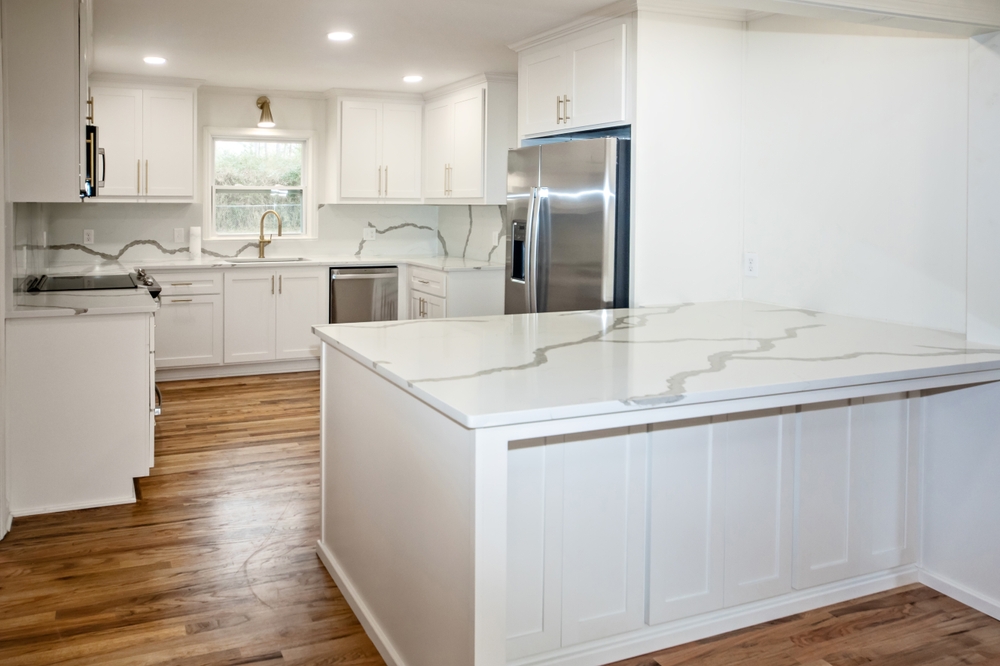
Choosing the right countertops can make a major difference in how your kitchen looks, functions, and holds up over time. For homeowners in Phoenix, Arizona, the decision involves more than selecting a beautiful surface. Daily cooking, intense summer temperatures, natural sunlight, and long-term maintenance all influence which countertop material makes the most sense.
Quartz, granite, and quartzite are three popular options for kitchen and bathroom remodeling projects. Each offers distinct advantages, but understanding their differences can help you avoid costly mistakes and choose a surface that fits your home.
Quick Answer: Quartz is an engineered countertop material that offers consistent patterns, stain resistance, and minimal maintenance. Granite is a natural stone known for its unique appearance and excellent heat resistance. Quartzite is a natural metamorphic stone that often resembles marble while providing impressive hardness and heat resistance. For Phoenix homeowners, the best choice depends on cooking habits, design preferences, maintenance expectations, budget, and exposure to direct sunlight.
What Phoenix Homeowners Should Know
-
Quartz requires minimal maintenance, making it a practical option for busy households that want attractive countertops without periodic sealing.
-
Granite handles heat well, which can benefit homeowners who frequently cook and entertain, although trivets are still recommended.
-
Quartzite offers natural beauty and impressive hardness, but many varieties require sealing to reduce staining.
-
Phoenix’s intense sunlight matters, especially in kitchens with large windows or outdoor cooking areas, because prolonged UV exposure can discolor some engineered quartz surfaces.
-
Installation quality is essential, particularly for heavy natural stone slabs that require proper cabinet support, accurate measurements, and carefully planned seams.
For homeowners throughout Maricopa County, choosing countertops is also an opportunity to consider how a new surface will complement existing cabinets, flooring, lighting, and the overall style of the property.
At Joe Myers Construction Inc., we understand that countertop selection is part of a larger remodeling decision. Our goal is to help homeowners think through material performance, design compatibility, and practical considerations before committing to a kitchen or bathroom update.
Quartz vs. Granite vs. Quartzite: What Are the Main Differences?
Quartz, granite, and quartzite differ primarily in composition, appearance, maintenance, and resistance to heat and staining. Quartz countertops are manufactured using mineral content and resins, while granite and quartzite are naturally occurring stones. These differences influence how each surface performs in Phoenix homes.
| Feature | Quartz | Granite | Quartzite |
|---|---|---|---|
| Material | Engineered | Natural stone | Natural stone |
| Appearance | Consistent or marble-inspired | Unique mineral patterns | Natural veining |
| Heat resistance | Moderate | High | High |
| Stain resistance | Generally high | Varies by stone and sealer | Varies by stone and sealer |
| Sealing | Generally unnecessary | Often recommended | Often recommended |
| UV resistance | Varies; many products are indoor-only | Generally good | Generally good |
| Maintenance | Low | Moderate | Moderate |
| Typical cost | Midrange to premium | Budget-friendly to premium | Often premium |
Actual performance varies by manufacturer, slab, finish, and maintenance practices.
How Do Quartz Countertops Perform in Phoenix Homes?
Quartz countertops perform well in Phoenix kitchens and bathrooms because they are generally nonporous, easy to clean, and available in a wide variety of colors and patterns. Their engineered composition provides a consistent appearance that works particularly well in contemporary homes.
Homeowners remodeling kitchens in Ahwatukee, Arcadia, and North Phoenix may appreciate quartz for its clean lines and predictable coloring.
Advantages of Quartz
Quartz offers several practical benefits:
-
It generally does not require sealing.
-
Its nonporous surface resists many common household stains.
-
It is available in solid colors, subtle patterns, and marble-inspired designs.
-
Routine cleaning usually requires mild soap and water.
-
Its consistent appearance can simplify coordination with cabinets and backsplashes.
Potential Drawbacks of Quartz
Quartz contains resins that can be damaged by excessive heat. Placing a hot pan directly on the countertop can cause discoloration or other damage.
Prolonged direct sunlight may also affect certain quartz products. This is particularly relevant in Arizona homes with large south-facing or west-facing windows.
For kitchens receiving substantial sunlight, check the manufacturer’s UV exposure guidance before selecting a product.
Why Do Homeowners Choose Granite Countertops?
Granite countertops are a popular choice for homeowners who want natural stone, distinctive patterns, and strong heat resistance. Every slab has its own mineral composition and visual character, making granite appealing for kitchens where a unique appearance is a priority.
In established neighborhoods around Central Phoenix and the Biltmore area, granite can complement traditional cabinetry, natural wood finishes, and transitional kitchen designs.
Advantages of Granite
Granite provides:
-
Naturally occurring colors and mineral patterns.
-
Strong resistance to everyday heat exposure.
-
Good scratch resistance under normal household use.
-
A range of finishes, including polished, honed, and leathered.
-
Options across several price ranges.
Potential Drawbacks of Granite
Granite is porous to varying degrees. Depending on the specific slab and finish, sealing may be recommended to reduce moisture absorption and staining.
Granite can also chip along exposed edges when struck by heavy objects. Although the stone is durable, it is not damage-proof.
Homeowners should inspect the actual slab whenever possible because samples may not fully represent the movement, coloring, and mineral patterns of a larger piece.
Is Quartzite Better Than Quartz or Granite?
Quartzite can be a better choice than quartz or granite for homeowners who prioritize natural veining, hardness, and heat resistance. However, it often comes with higher material and fabrication costs, and many varieties require more maintenance than engineered quartz.
Quartzite forms when sandstone undergoes intense heat and pressure. The resulting stone can have flowing patterns and light colors that resemble marble.
This appearance makes quartzite attractive for luxury kitchen renovations in Paradise Valley, Scottsdale, and other parts of the Phoenix metropolitan area.
Advantages of Quartzite
Quartzite offers:
-
Natural veining and distinctive color variation.
-
Excellent hardness when the material is genuine quartzite.
-
Strong resistance to heat.
-
Attractive options for statement kitchen islands.
-
A natural stone appearance that works with contemporary and traditional designs.
Potential Drawbacks of Quartzite
Quartzite may require periodic sealing, depending on the slab’s porosity and finish. Some varieties can absorb oils or colored liquids if they are not adequately protected.
Fabrication may also be more expensive because of the material’s hardness and the complexity of certain slabs.
Important: Some stones sold under quartzite-related trade names may have different geological compositions and performance characteristics. Ask the supplier to identify the material and explain its maintenance requirements before purchasing.
How Does Arizona’s Climate Affect Countertop Selection?
Arizona’s climate affects countertop selection through intense sunlight, high summer temperatures, and the potential for large temperature changes in outdoor environments. Indoor kitchens with reliable climate control face fewer environmental challenges than outdoor kitchens or countertops exposed to sustained direct sunlight.
In Phoenix, consider three important conditions.
1. Direct sunlight: Engineered quartz products can experience discoloration or resin deterioration with prolonged UV exposure. Natural granite and genuine quartzite are generally more suitable for sunny applications, although individual stone characteristics still matter.
2. Outdoor heat: Outdoor cooking areas in the Valley of the Sun need surfaces selected for exterior conditions. Standard indoor quartz should not be assumed suitable for outdoor use.
3. Dust and everyday cleaning: Desert dust can accumulate on countertops, especially near frequently opened patio doors. Gentle cleaning helps prevent abrasive particles from being dragged across polished finishes.
For outdoor kitchens, verify the stone, finish, sealer, adhesive, and installation system are appropriate for exterior use.
What Warning Signs Suggest Your Countertops Need Replacement?
Countertops may need replacement when structural damage, persistent staining, failing seams, or an unsuitable layout makes continued use impractical. Phoenix homeowners planning a remodel should inspect existing surfaces before deciding whether refinishing, repair, or full replacement is the better investment.
Watch for these warning signs:
-
Deep cracks: Cracks extending through stone may indicate impact damage, inadequate support, or movement.
-
Loose seams: Separating countertop joints can allow water and debris to collect.
-
Persistent stains: Deep discoloration may indicate that porous stone needs professional treatment or replacement.
-
Chipped edges: Damage near sinks, islands, or heavily used corners can affect appearance and safety.
-
Water damage around sinks: Swollen cabinet materials or failing sealant can create problems beneath the countertop.
-
Uneven surfaces: A countertop that appears to shift or sag may indicate inadequate cabinet support.
-
An impractical layout: Limited preparation space or poorly positioned appliances may justify replacement during a larger kitchen remodel.
Minor surface issues do not always require a new countertop. A professional assessment can help distinguish repairable cosmetic damage from problems that warrant replacement.
When Should You Call a Countertop or Remodeling Professional?
A countertop or remodeling professional should be consulted when installation requires precise fabrication, structural support evaluation, plumbing coordination, or significant changes to the kitchen layout. Heavy stone slabs and engineered surfaces require specialized equipment and handling.
Homeowners can safely compare samples, review maintenance instructions, and measure approximate countertop dimensions for early budgeting.
However, final measurements, sink cutouts, seam placement, and structural considerations should be handled by qualified professionals.
For older Phoenix homes, cabinet condition deserves particular attention. Existing cabinetry may need adjustment or reinforcement before supporting a new stone countertop.
What Common Problems Affect Kitchen Countertops?
The most common countertop problems include staining, heat damage, chips, seam deterioration, and damage caused by unsuitable cleaning products. The likelihood of each problem depends on the material, installation quality, and how the kitchen is used.
Heat Damage
Quartz is more vulnerable to heat-related damage than granite or quartzite. Use trivets and avoid placing hot cookware directly on any finished countertop.
Staining
Granite and quartzite may absorb liquids when their surfaces are sufficiently porous or inadequately sealed. Clean spills promptly and follow the supplier’s sealing recommendations.
Chips and Cracks
Heavy impacts can damage edges and corners. Undermount sinks, large overhangs, and unsupported sections require careful installation planning.
Cleaning Damage
Harsh chemicals, abrasive pads, and acidic cleaners can damage certain finishes or sealers.
Phoenix homeowners should also avoid assuming that a natural stone’s hardness makes it immune to every type of damage.
How Can You Maintain Quartz, Granite, and Quartzite Countertops?
Quartz, granite, and quartzite countertops can maintain their appearance for years with gentle cleaning, prompt spill removal, and material-specific care. The most effective maintenance routine is one that follows the manufacturer’s or stone supplier’s recommendations.
Everyday Maintenance
-
Wipe surfaces with a soft cloth and a suitable mild cleaner.
-
Clean spills promptly, especially oils, wine, coffee, and acidic liquids.
-
Use cutting boards to protect finishes and knives.
-
Place trivets beneath hot cookware.
-
Avoid dragging rough ceramic or metal objects across the surface.
Seasonal Maintenance in Phoenix
Before the hottest summer months, check whether direct sunlight is affecting exposed countertop areas.
During seasonal deep cleaning, inspect seams, sink edges, and sealant for deterioration.
For granite and quartzite, follow the fabricator’s guidance on whether the stone needs resealing. Sealing intervals vary considerably, and some stones need little or no additional treatment.
What Results Should You Expect From New Countertops?
New countertops should provide an improved work surface, updated appearance, and better alignment with your kitchen’s daily needs when the material and installation are properly selected. The results depend on the countertop’s composition, finish, layout, and care requirements.
A successful kitchen countertop project typically includes accurate measurements, appropriate support, carefully positioned seams, clean sink cutouts, and a finish that complements surrounding materials.
For homeowners remodeling properties in Tempe, Chandler, or Phoenix, countertop replacement can also be coordinated with cabinet updates, backsplash installation, lighting changes, and plumbing fixture upgrades.
No countertop material is completely maintenance-free or damage-proof. Realistic expectations help homeowners select a surface they will be comfortable using and caring for over time.
What Countertop Selection Mistakes Should Homeowners Avoid?
The most common countertop selection mistakes involve choosing solely by appearance, overlooking maintenance requirements, and failing to plan for installation details. Avoiding these problems can help Phoenix homeowners control project costs and reduce the risk of disappointment.
| Common Mistake | Possible Consequence | Better Approach |
|---|---|---|
| Choosing quartz for an exposed outdoor kitchen | UV or heat-related deterioration | Select a material rated for exterior use |
| Assuming every natural stone is stain-proof | Discoloration or absorbed spills | Verify porosity and sealing requirements |
| Selecting a slab from a small sample alone | Unexpected color or pattern variation | View the full slab before fabrication |
| Ignoring cabinet support | Stress, movement, or installation problems | Evaluate the cabinet structure |
| Overlooking seam placement | Visible or inconvenient joints | Discuss the layout before fabrication |
| Focusing only on material price | Unexpected fabrication and installation costs | Request an itemized project estimate |
What Does a Typical Phoenix Countertop Upgrade Look Like?
A common Phoenix countertop upgrade involves replacing an older kitchen surface while keeping the existing cabinet layout. This can be a practical approach when the cabinets are structurally sound and the homeowner wants a visual update without completely redesigning the kitchen.
For example, a homeowner with traditional wood cabinets might compare a light-colored quartz surface with a naturally veined quartzite slab.
Quartz could offer predictable coloring and easier routine maintenance. Quartzite might provide a more distinctive natural stone appearance but require a larger budget and additional care.
Before installation, the project would typically involve confirming cabinet support, selecting a slab or product, taking final measurements, planning seams, and coordinating sink and faucet details.
This is an illustrative local scenario, not a description of a specific completed project.
Which Remodeling Services Help With Countertop Replacement?
Countertop replacement may involve more than removing one surface and installing another. Depending on the condition and layout of the kitchen, related work can include cabinetry modifications, backsplash updates, sink replacement, plumbing coordination, and other remodeling improvements.
At Joe Myers Construction Inc., we encourage homeowners to consider how their countertop choice fits into the overall remodeling plan.
A coordinated approach can help identify layout conflicts, establish realistic expectations, and reduce unnecessary changes after materials have been selected.
How Do Quartz, Granite, and Quartzite Compare for Different Kitchens?
The best countertop choice depends on how a kitchen is used, how much maintenance the homeowner accepts, and the desired appearance. For many Phoenix households, quartz is a practical low-maintenance option, granite offers natural durability, and quartzite provides distinctive natural veining.
| Your Priority | Material to Consider | Why |
|---|---|---|
| Easy everyday cleaning | Quartz | Generally nonporous and does not require sealing |
| Frequent cooking | Granite or quartzite | Strong heat resistance |
| Marble-inspired natural appearance | Quartzite | Natural veining and lighter color options |
| Consistent colors and patterns | Quartz | Engineered appearance |
| Distinctive natural mineral patterns | Granite | Each slab is unique |
| Outdoor kitchen | Suitable granite or quartzite | Generally better UV tolerance than standard quartz |
| Lower initial material budget | Selected granite or quartz options | Entry-level choices may be more affordable |
These are starting points rather than absolute rules. Product quality, slab selection, and installation costs can change the final comparison.
Which Phoenix-Area Homes Can Benefit From Countertop Upgrades?
Countertop upgrades can benefit Phoenix-area homes with worn surfaces, outdated kitchen layouts, or finishes that no longer match the homeowner’s needs. The right material should reflect the property’s design, household activities, and environmental exposure.
Homeowners in Glendale, Peoria, Mesa, and surrounding Maricopa County communities may have different design preferences, but the same fundamental questions apply: How will the surface be used, what maintenance is acceptable, and how does the material fit the remodeling budget?
What Is the Cost of Choosing the Wrong Countertop?
Choosing the wrong countertop can lead to avoidable maintenance, premature cosmetic damage, and additional replacement expenses. The risk is greatest when the selected material does not match the installation environment or household habits.
For example, placing an indoor-only quartz product in a sun-exposed outdoor kitchen could create problems that routine cleaning cannot resolve.
Likewise, choosing a porous natural stone without understanding its care requirements may lead to staining and additional maintenance costs.
The better approach is to compare the full installed cost, expected maintenance, and suitability of each material before ordering.
Frequently Asked Questions About Countertops in Phoenix
1. Is quartz or granite better for Phoenix kitchens?
Quartz is often better for Phoenix homeowners who prioritize low maintenance and consistent patterns, while granite may be preferable for those who want natural stone and greater heat resistance. Both can perform well indoors. The best choice depends on cooking habits, sunlight exposure, budget, and design preferences.
2. Can quartz countertops withstand Arizona heat?
Quartz countertops generally perform well inside climate-controlled Arizona homes, but they can be damaged by direct contact with very hot cookware. Prolonged sunlight may also discolor certain products. Standard indoor quartz is generally not recommended for outdoor kitchens unless the manufacturer specifically approves that application.
3. Does quartzite need sealing in Phoenix?
Many quartzite countertops need sealing to reduce liquid absorption and staining, although requirements vary by stone and finish. Phoenix’s dry climate does not eliminate the need for appropriate surface protection. Ask the fabricator about the specific slab’s porosity and follow the recommended maintenance schedule.
4. Which countertop looks most like marble?
Quartzite often provides the closest natural stone alternative to marble, particularly in varieties with light backgrounds and flowing veining. Engineered quartz can also reproduce a marble-inspired appearance with more consistent patterns. Homeowners in Scottsdale and Paradise Valley should compare full slabs and samples before choosing.
5. Is granite cheaper than quartzite?
Granite is often less expensive than premium quartzite, but prices overlap considerably. Slab rarity, thickness, finish, fabrication complexity, and installation requirements affect the final cost. In the Phoenix market, comparing itemized estimates for specific materials is more useful than relying on broad price categories.
6. Can I use granite or quartzite in an outdoor kitchen in Arizona?
Granite and genuine quartzite are generally better candidates for Arizona outdoor kitchens than standard indoor quartz because they offer strong heat and UV resistance. However, the specific slab, finish, sealer, and installation materials must be suitable for exterior exposure. A professional should review the entire outdoor countertop assembly.
7. Which countertop is easiest to clean after everyday cooking?
Quartz is generally the easiest of the three materials to maintain because it is nonporous and typically does not require sealing. Granite and quartzite are also manageable with proper care. For busy households in Chandler, Tempe, and nearby communities, maintenance requirements may be a deciding factor.
8. Will new countertops increase my home’s value in Phoenix?
New countertops may improve a Phoenix home’s appeal and marketability, particularly when the materials complement the kitchen and the surrounding property. However, a specific increase in resale value is not guaranteed. Overall kitchen condition, neighborhood expectations, installation quality, and renovation costs influence the financial outcome.
9. How long does countertop installation take?
The on-site installation of a straightforward countertop project may take approximately one day, but the overall process is longer. Material selection, slab availability, templating, fabrication, plumbing coordination, and project complexity affect the schedule. Larger Phoenix kitchen remodels may require additional time for related work.
10. Should I replace my cabinets when installing new countertops?
Cabinet replacement is not always necessary when installing new countertops. If existing cabinets are level, structurally sound, and properly supported, they may be suitable for reuse. However, homeowners planning layout changes or installing heavy natural stone should have the cabinetry evaluated before fabrication and installation.
Choose Countertops That Fit Your Phoenix Home
Quartz, granite, and quartzite each offer valuable advantages. Quartz stands out for easy maintenance and design consistency, granite provides distinctive natural patterns and heat resistance, and quartzite combines natural veining with impressive hardness.
For Phoenix homeowners, the right decision comes from balancing appearance, everyday use, sunlight exposure, maintenance, and total project cost.
Taking time to compare actual materials and installation requirements can help create a kitchen that remains attractive and functional for years.
Plan a Kitchen Countertop Upgrade With Confidence
At Joe Myers Construction Inc., we believe informed remodeling decisions begin with understanding your options and choosing materials that fit your home and lifestyle.